The challenge
Flovi moves cars for rental and fleet companies: a professional driver picks a car up in one place and delivers it to another. Customers book and follow those transfers in the Flovi customer portal.
As Flovi grew market by market, the portal grew with it. Each market ended up with its own version — different layouts, different words for the same things, and features that existed in one country but not in the next. Booking a transfer, the task customers do most, took longer than it should. And every new feature had to be designed and built more than once.
My role
I led design for the customer portal end to end: auditing the existing portals, defining one structure for every market, building a shadcn-based design system together with engineering, and designing the core flows. I also brought AI tools into our workflow so we could explore and prototype ideas much faster.
One portal, one system
Instead of patching each market, we rebuilt the portal on one foundation. The design system gives every market the same tokens, components and patterns, so local differences — currency, VAT, office rules — live in the content, not in custom screens.
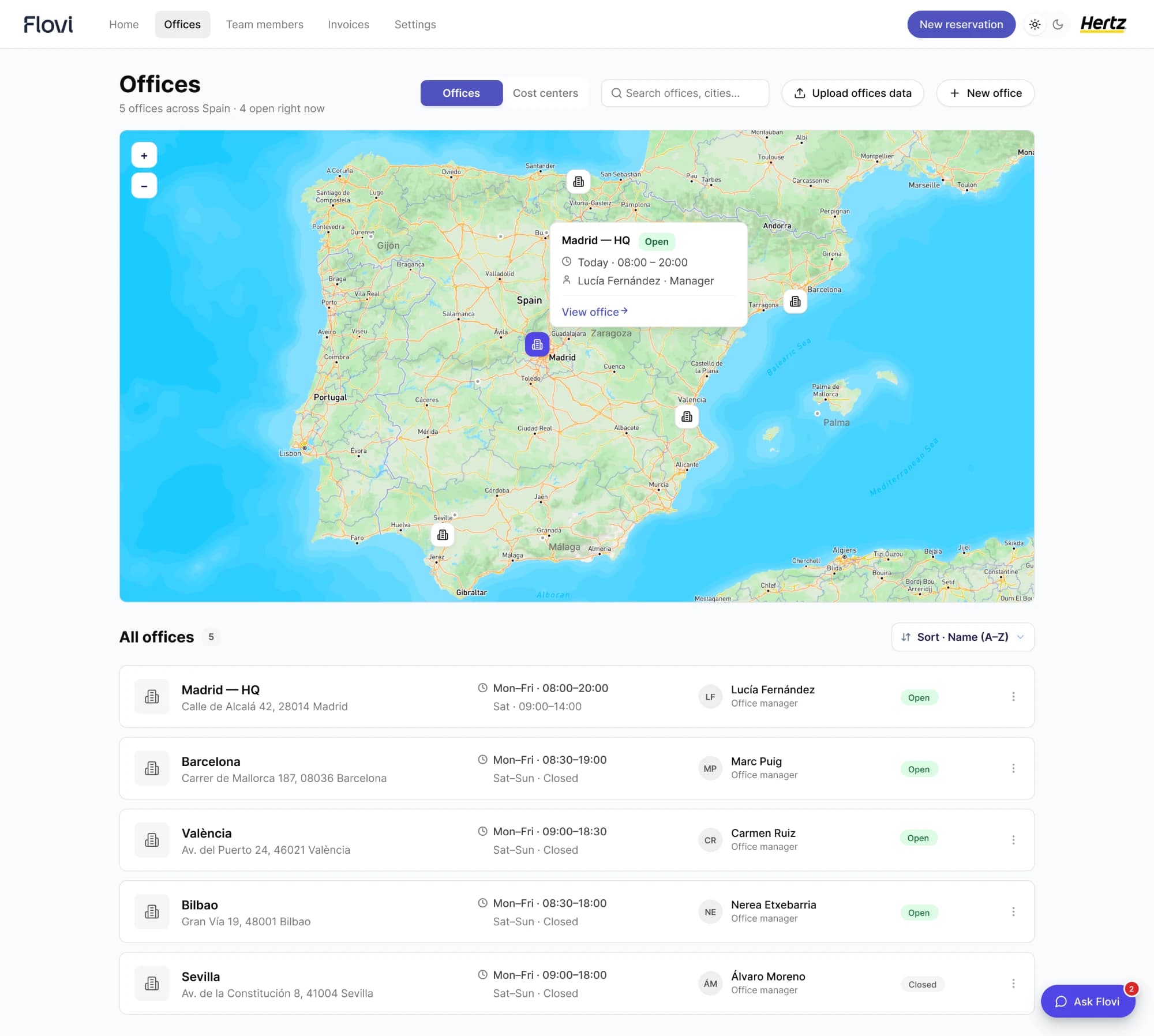
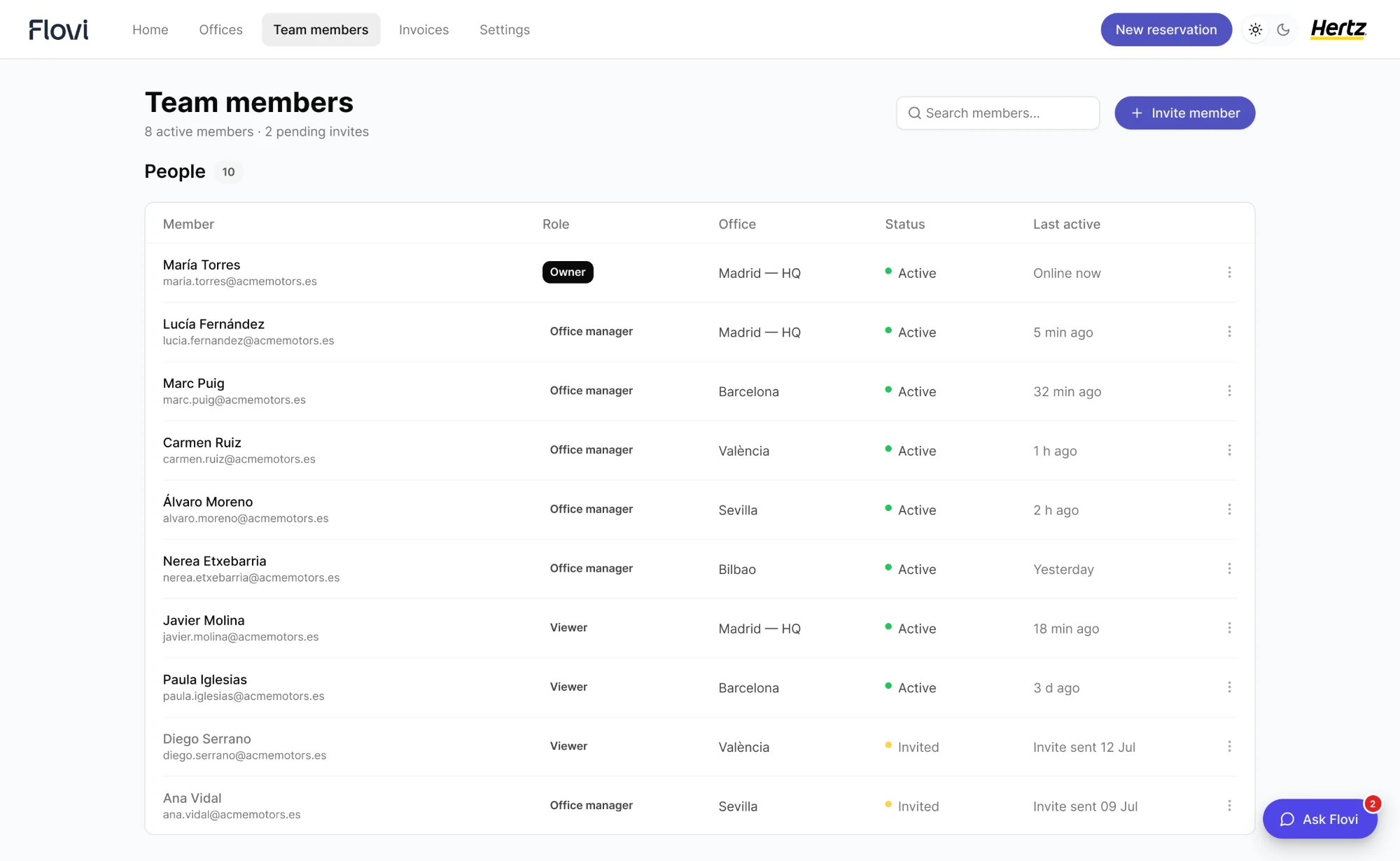
The navigation became five clear areas: Home, Offices, Team members, Invoices and Settings, with “New reservation” always one click away.
Everything on the move, at a glance
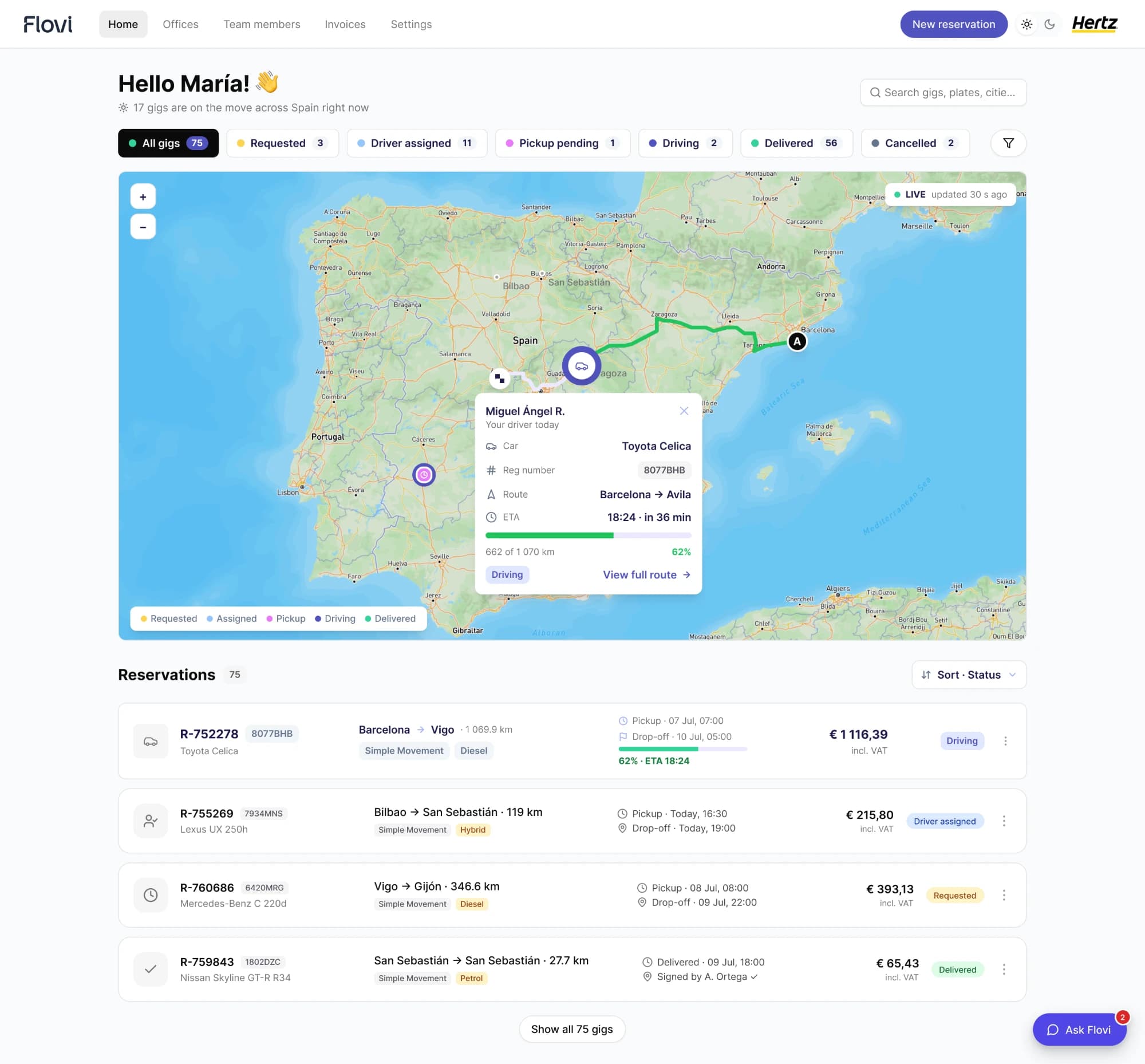
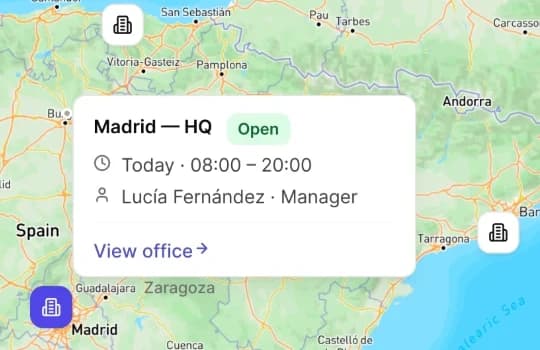
Home answers the question customers ask most: where is my car right now? A live map shows every active transfer. Status filters show how many cars are requested, assigned, on the road or delivered, and each reservation shows its route, timing and price in a single row.
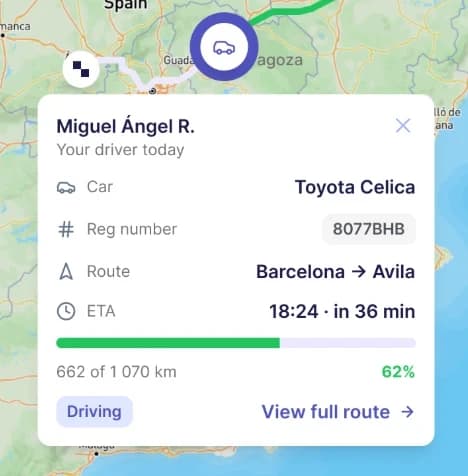
Selecting a car opens the driver, the vehicle, the route and a live ETA — so customers can follow a transfer without calling anyone for an update.
Booking in about 20 seconds
Booking a transfer is the task customers repeat most, so every second counts. The new reservation form asks one thing at a time, fills in what it can on its own — like pickup and drop-off windows based on office hours — and keeps a live summary of the booking next to the form.
The average time to complete a reservation dropped by 20%, to about 20 seconds.
Billing without surprises
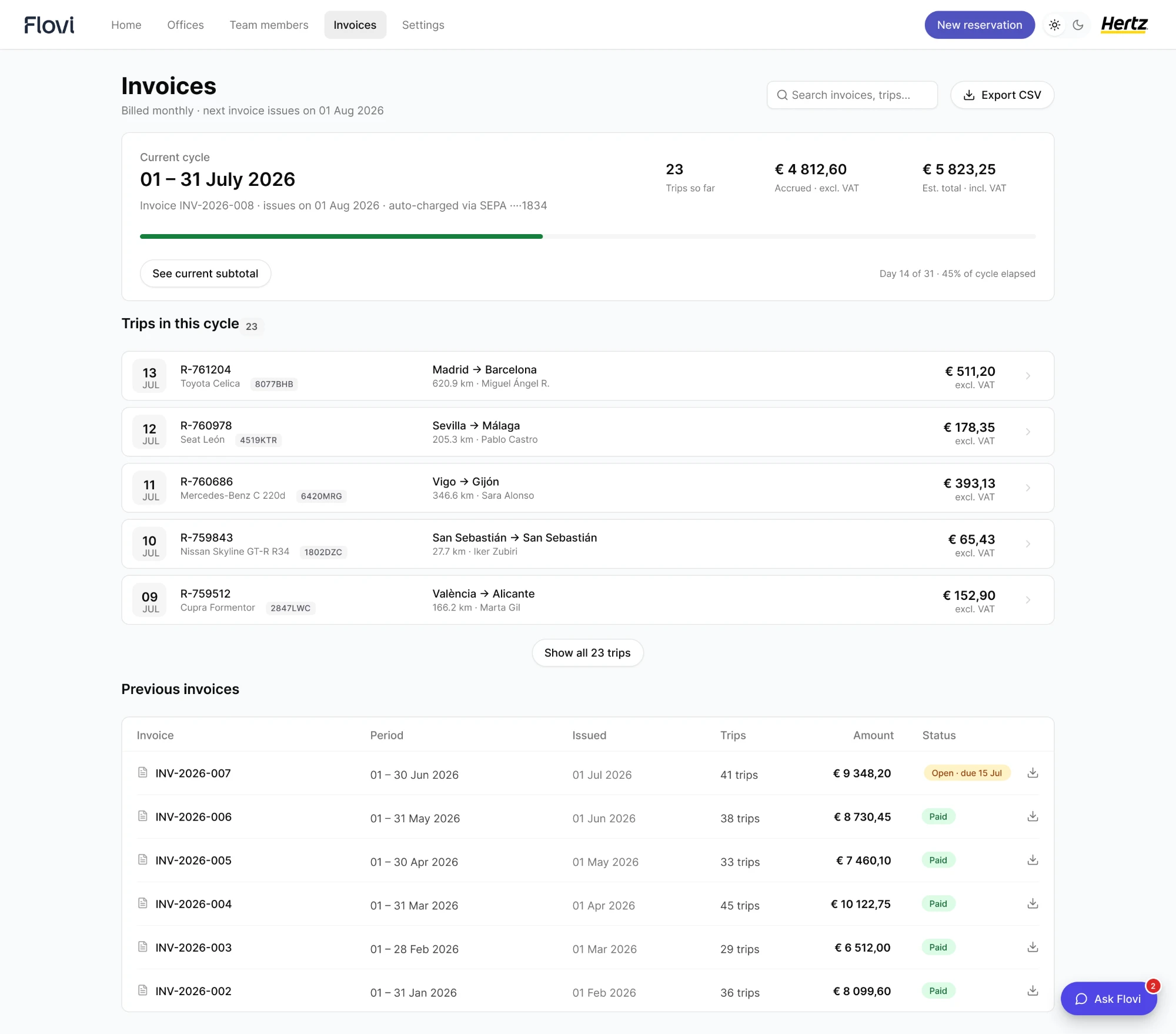
Finance teams can see the current billing cycle at any time: trips so far, the amount accrued and an estimated total. Every trip in the cycle is listed, and earlier invoices are one click away.

Results
One portal gave every market the same, faster experience — and gave the team one product to improve instead of four.
- More customers
- +30%
- To book a reservation — 20% faster
- ~20 s
- Markets on one portal
- 4
What I learned
Most of the work wasn’t in the screens. It was getting four markets to agree on one way of doing things — the same words, the same steps, and a clear line between the local differences that matter and the ones that don’t.